
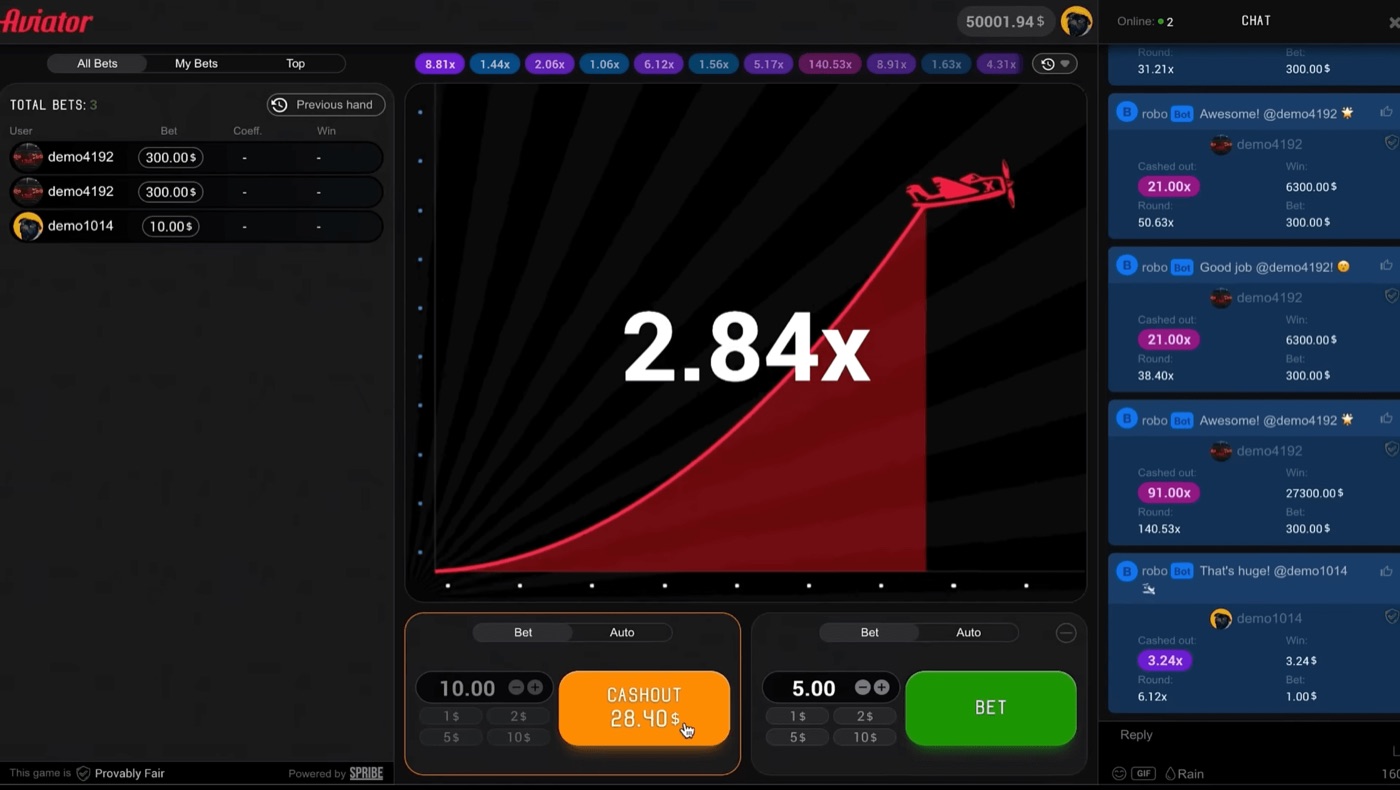
Aviator is a crash game by Spribe built around a rising multiplier and a plane that can crash at any point. The game is not a slot and has no bonus round: each round begins at 1.00x, the multiplier rises, and the player must cash out before the crash.
The central number is a 97% return to player rate, or RTP. That figure implies a 3% house edge over a large number of bets. This guide explains where that edge sits, how expected value applies to each stake, and why no betting system can remove it.
Aviator round mechanism
Aviator uses a multiplier that starts at 1.00x and increases until the round crashes. A typical round lasts about 8-30 seconds, with 60-90 rounds available in an hour.
Spribe describes Aviator as a social multiplayer game consisting of an increasing curve that can crash anytime. The player wins only when a cash-out request reaches the server before the crash point.
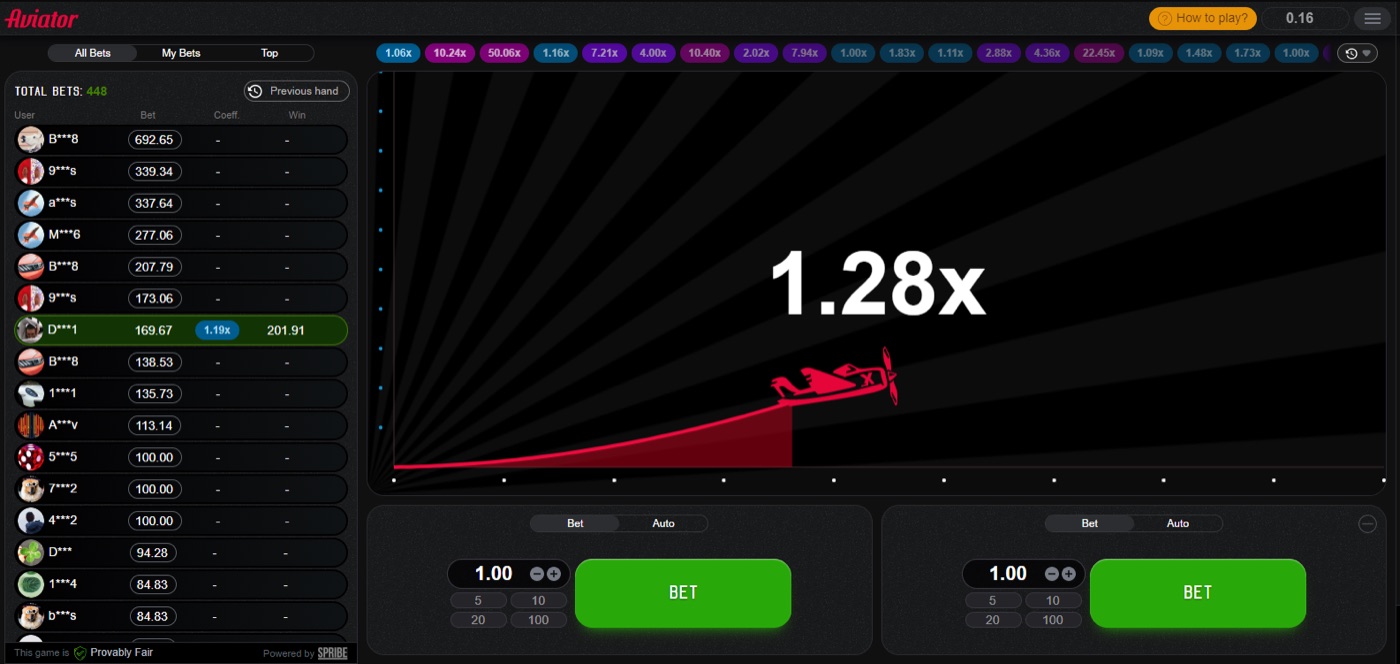
The Aviator plane rises while the live multiplier increases before the crash point.
The basic round process has four parts:
- The round begins with the multiplier at 1.00x.
- The multiplier rises while the plane remains in flight.
- The player selects a manual or automatic cash-out point.
- The round ends when the plane crashes, and bets that were not cashed out lose.
A player can place two bets in the same round. Each bet has its own cash-out, so one stake can leave at one multiplier while the other remains active. The interface also includes Bet and Auto tabs, an Auto Cash-Out setting, and Auto Bet or Auto Play for 10-100 rounds.
The game displays previous multipliers in a round-history panel. It also shows live bets, a chat, a Provably Fair badge and typical quick-stake buttons. These features change how players interact with rounds, but they do not change the mathematical result distribution.
Where the edge sits
Aviator has a 97% RTP and a 3% house edge. The 3% edge applies to the stake at every cash-out target, rather than appearing as a separate fee on a winning bet.
For a target multiplier of m, the probability that a round reaches that target is 0.97 divided by m. The probability falls as the target rises, while the payout multiplier rises at the same time.
| Cash-out target | Probability of reaching it | Expected return on a stake |
|---|---|---|
| 1.2x | 80.8% | 97% of stake |
| 1.5x | 64.7% | 97% of stake |
| 2x | 48.5% | 97% of stake |
| 3x | 32.3% | 97% of stake |
| 5x | 19.4% | 97% of stake |
| 10x | 9.7% | 97% of stake |
| 20x | 4.85% | 97% of stake |
| 50x | 1.94% | 97% of stake |
| 100x | 0.97% | 97% of stake |
The table shows why a low target is not automatically better value. At 1.5x, the round reaches the target about 64.7% of the time. At 10x, it reaches the target about 9.7% of the time. Yet the expected return remains 97% of the original stake in both cases.
About 3% of rounds crash instantly at 1.00x, which is roughly 1 round in 33. Instant crashes are one visible part of the distribution, but the complete house edge comes from the probabilities across all possible crash points.
- Lower targets produce more frequent wins but smaller wins.
- Higher targets produce less frequent wins but larger wins.
- The 3% edge remains in both choices.
- The operator’s advantage is measured over many bets, not one result.
Expected value per stake
Aviator gives a 97% expected return on every cash-out target. A 3% house edge therefore creates a negative expected value equal to 3% of the stake.
Expected value does not predict the result of one round. It describes the average result across a large number of comparable bets, so a player can win a session while still facing negative expected value on every stake.
Consider a $10 stake with a selected target of 2x. The target probability is 48.5%. If the cash-out succeeds, the total return is $20, including the original stake. If the round crashes before 2x, the return is $0.
- Winning return: 48.5% multiplied by $20 equals $9.70 in expected return.
- Losing return: 51.5% multiplied by $0 equals $0 in expected return.
- Total expected return: $9.70 from a $10 stake.
- Expected result: a loss of $0.30, or 3% of the stake.
The same calculation works at 1.5x. A $10 stake has a 64.7% chance of reaching the target, and a successful cash-out returns $15. The expected return is $9.705, which is approximately $9.70 after rounding. The expected loss is approximately $0.30.
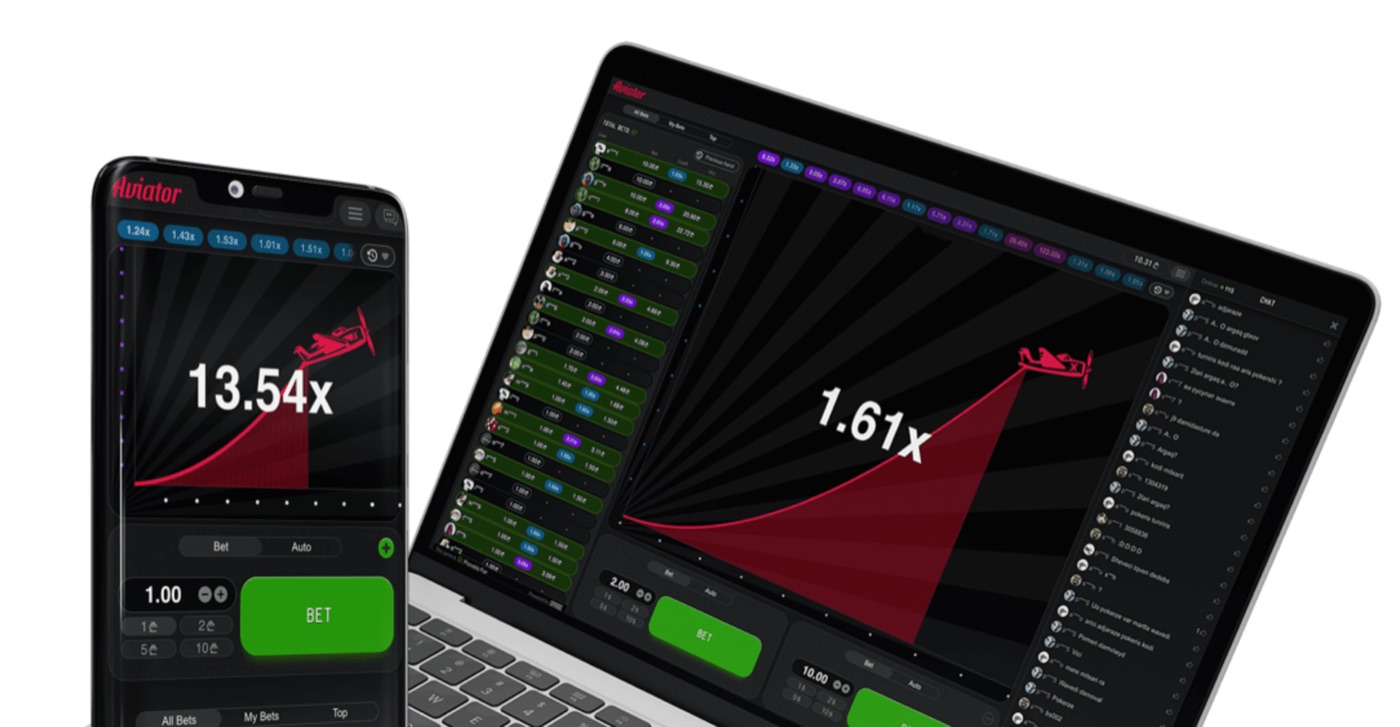
The Aviator interface can show different live multipliers, including 13.54x and 1.61x.
A simple long-run example uses 100 bets of $10 each. The total amount staked is $1,000, and the mathematical expected loss is 3% of that amount, or $30. Actual results can be higher or lower because Aviator is a high-variance game.
Variance explains why short sessions can look very different from the average. A player may hit a high multiplier and finish ahead, or experience several low rounds and lose quickly. Neither outcome changes the 97% RTP or the 3% edge.
For gambling players comparing a crash game, multiplier, cash-out or stake size on a bookmaker site, the same question matters: what is the expected return over many bets? A page such as aviator game sportybet may be part of a search for an Aviator betting location, but it does not alter the game’s stated RTP or house edge.
Why systems cannot win
Aviator rounds are independent, and the 3% house edge applies whether a player uses manual cash-out or automation. A betting system can change stake size and timing, but it cannot change the probability formula of 0.97 divided by the target multiplier.
Several common approaches aim to manage losing streaks or capture different multiplier levels. They can change variance, which means the size and frequency of swings, but they do not create positive expected value.
- An auto cash-out at 1.5x or 2x sets a fixed exit point.
- A two-bet split can place one cash-out at 1.5x-2x and leave another bet for 5x-10x.
- A high target such as 5x-50x accepts fewer successful rounds for larger possible returns.
- A stake rule can limit exposure to no more than 2% of a bankroll per round.
- Loss and win limits can stop play at preset amounts.
These methods may help a player control spending or choose a preferred level of risk. They do not change the 3% edge. Playing during a quieter period may produce a smoother connection, but it does not improve the odds.
Martingale shows the problem clearly. The system doubles the stake after each loss, and 10 consecutive losses take the next stake to 1,024 times the base stake. A larger next bet does not recover the mathematical disadvantage; it increases the amount exposed to it.
Fibonacci and D’Alembert systems have the same limitation. Patterns, graph analysis, a “best time to play” claim and a strategy chart PDF cannot predict an independent crash point or remove the negative expected value.
Predictor tools do not solve the problem either. The crash point is fixed before take-off, so a later app, bot or signal cannot know a future result from the visible multiplier history.
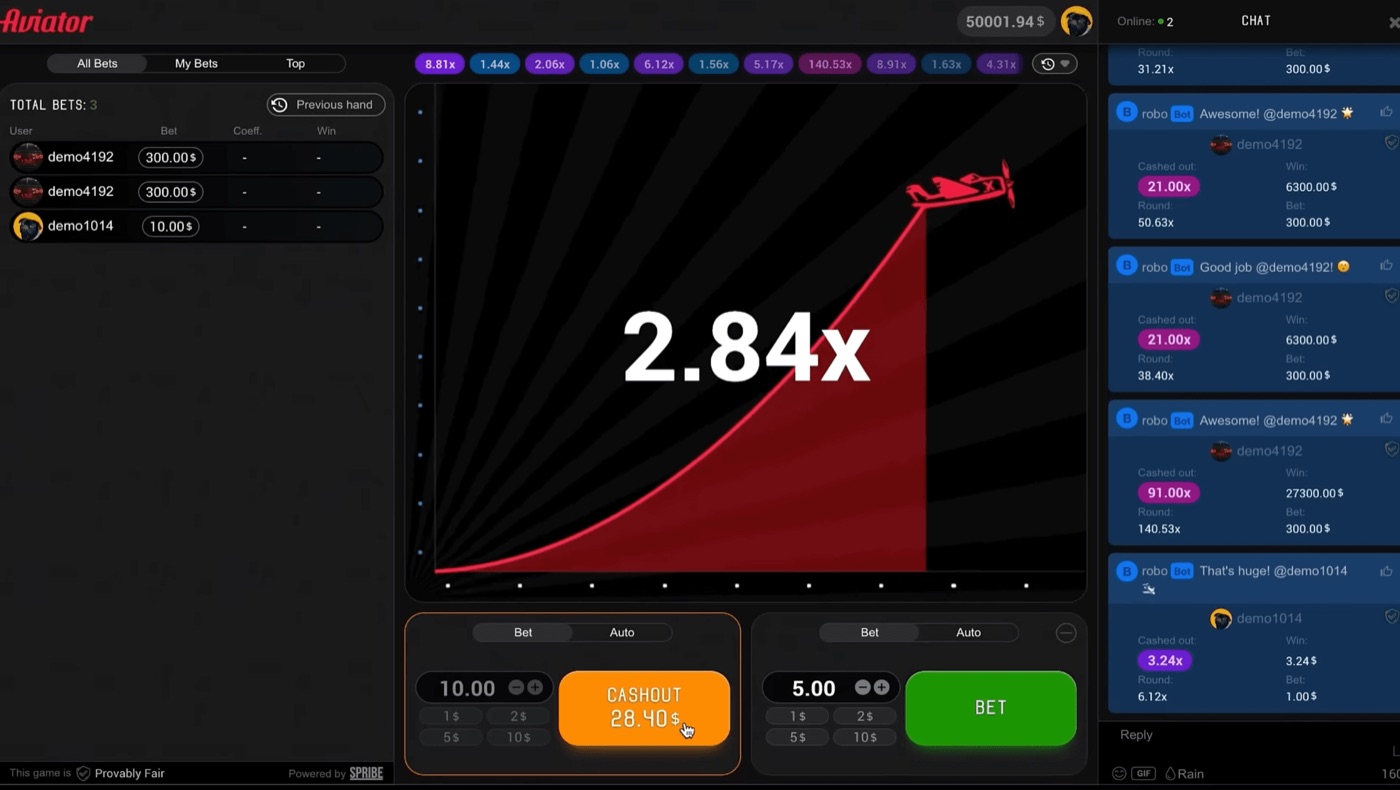
The interface can show live bets, chat activity and a cash-out at 28.40x.
Provably fair results
Aviator uses a SHA-256 server-seed hash before each round. Player client seeds are combined with the server seed, and the inputs are revealed after the round so the result can be checked with the verification tool inside the game.
The crash point is fixed before take-off, and neither the operator nor Spribe can change the result after the round starts. This process helps players check that the published result matches the committed inputs, but it does not remove the 3% house edge.
The fairness process answers a different question from expected value. Provably fair verification asks whether the round result was committed and calculated as stated. RTP asks how the probabilities affect returns over many bets.
- The server publishes a SHA-256 hash of the server seed.
- The game combines the server seed with client seeds from players.
- The crash point is fixed before the plane takes off.
- The round ends at that fixed point.
- The inputs become available for checking after the round.
Players sometimes describe Aviator as rigged when a cash-out times out or when results seem different between accounts. A cash-out request must reach the server before the crash. Latency or a slow device can cause a timeout, while the fairness check concerns the fixed crash result.
The game works on desktop, tablet and mobile browsers and was built for low bandwidth and budget devices. Connection quality can affect whether a cash-out request arrives in time, but it cannot improve the expected return.
Using the numbers responsibly
Aviator offers a demo mode that needs no registration. Operator features such as stakes, win caps, free bets and available payment methods depend on the operator.
Typical stakes range from about $0.10 to $100 per bet, depending on the operator. The maximum multiplier is not published by Spribe, and win caps per round are set by each operator.
- Use demo mode first to learn the cash-out controls.
- Set a maximum loss before placing a stake.
- Keep the stake size consistent instead of chasing losses.
- Remember that automation does not change the RTP.
- Stop when the preset limit is reached.
The interface supports Auto Cash-Out at a preset multiplier and Auto Bet or Auto Play for 10-100 rounds. These controls can reduce the need for repeated clicks, but they can also place more bets automatically. A responsible gambling plan should treat the 3% edge as a cost of play.
Operators may also provide features such as Rain Promo free bets, operator-granted free bets, tournaments and races. Those offers are handled by operators individually and do not change the underlying probability formula for a regular Aviator stake.
Aviator FAQ
Aviator has a 97% RTP and a 3% house edge. The game provides manual and automatic cash-out choices, but neither choice changes the expected return.
Spribe fixes each crash point before take-off through its provably fair process. A player can check the revealed inputs after the round with the verification tool inside the game.
What is the Aviator house edge?
The Aviator house edge is 3%, based on a 97% RTP. In expected-value terms, a player loses 3% of the stake on average over a large number of comparable bets.
Does a 2x cash-out beat the edge?
No. A 2x target has a 48.5% chance of being reached, and its expected return is still 97% of the stake. The target changes variance, not the house edge.
Can an app predict Aviator?
No prediction app can determine a future crash point. Aviator fixes the crash point before the round starts, and third-party predictor apps, bots and public-math signals cannot remove the 3% edge.
Why did my cash-out time out?
The cash-out request must reach the server before the crash. A timeout can result from latency or a slow device, while the round’s crash point remains fixed.
Can Martingale remove the 3% edge?
No. Martingale increases the next stake after a loss, but it does not change the probability of reaching a target. After 10 losses, the next stake reaches 1,024 times the base stake, increasing exposure rather than creating an advantage.